Her name is Gea. and She’s not just a mother.
She’s a kind, resilient, and inspiring woman who has spent her life putting others first, making people laugh, and lifting everyone around her. Recently, she was diagnosed with blood cancer. At first, we didn’t know what to do — I struggled, my family struggled —but she never gave up.
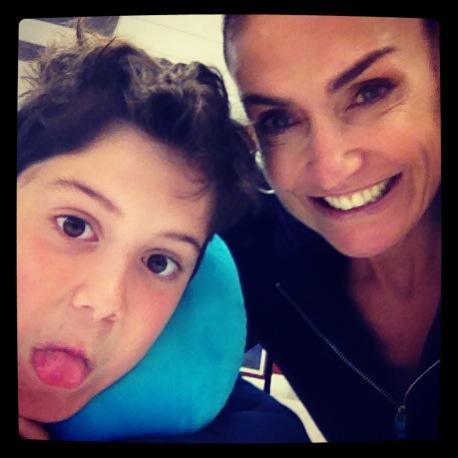
She goes on through her day like nothing ever happened.
Now, we need others to believe too — that someone out there could be her match. You can follow her journey, send your love, and most importantly, share her story. This isn’t a call for charity — it’s a call for time, love, and a little action. We believe someone can help her. Maybe, that someone is you.

Gea's Journey Hello friends,
As some of you know, I was diagnosed with blood cancer (MDS) 7 months ago.
I’ve been having treatment and by and large life hasn’t changed that much. I’ve been really, really fortunate.
Unfortunately, MDS is incurable and my disease will eventually develop into Acute Myeloid Leukemia. Also incurable. I’m high risk, which means the likelihood of that progression is within the next 12-24 months.
My only chance of beating this, is through a Stem Cell Transplant ie my stem cells replaced by a donors stem cells.
I need to find a suitable donor and for me that’s proving a little challenging and that’s why I’ve decided to share this with you.
After ruling out my brother and son as suitable donors, my transplant team moved to the international registry and whilst they did find a couple of matches, unfortunately they have fallen through. To put this in context, most of the donors come from European countries (it’s mandatory in many EU countries for citizens to join the registry from the age of 18). Essentially it’s an opt out rather than opt in. Unfortunately for me, those matches didn’t agree to proceed or follow through with the next step. 😩
Sadly, we have the lowest % of donors per capita (in the world) here in Australia and so this is why I’m reaching out to you. I’m not looking for sympathy, just asking for some help to get the message out there. I need your help to raise some awareness of the importance of stem cell donation and giving the best gift of all, extended life. Who knows, there might be a match for me out there (though Paulie will always be my PERFECT match 😉❤️)
Our beautiful girl Adele has put together a little video on how easy it is to join the registry plus I’ve included a link for the registry process below.
Alternatively, those who are interested can book into any Life Blood donation centre and donate blood and elect to be put on the registry at the same time. This is quicker than the mail out option.
To be on the registry, you must be aged between 18-35.
I’d be really grateful if you could share the registry details with your own network. There are lots of stories from donors to explain the actual stem cell collection process. It’s noninvasive and not too dissimilar to giving blood. The stem cell collection only takes a couple of hours.
If you’re hearing about me for the first time…please don’t worry for me (yet). Rest assured I’m doing ok. I promise.
Your support through spreading the importance of stem cell donation would be amazing and I will always be grateful.


What is MDS?
MDS, or Myelodysplastic Syndrome, is a rare condition that affects the bone marrow — the part of the body that produces blood cells. In someone with MDS, the bone marrow doesn’t work properly, which means it struggles to produce enough healthy red cells, white cells, or platelets. This can lead to fatigue, frequent infections, or easy bruising.
How it Can Progress
For some people, MDS stays stable for many years. But in others, like in Gea’s case, it’s considered high-risk — which means there’s a greater chance that it will develop into something more serious called Acute Myeloid Leukaemia (AML).
AML is a fast-moving form of blood cancer. When MDS turns into AML, the bone marrow begins making large numbers of abnormal white cells very quickly, crowding out healthy ones. This makes treatment more urgent and complex.
Why Stem Cell Donation Matters
For people with high-risk MDS or AML, a stem cell transplant — where healthy cells from a donor replace the faulty ones — is often the best and only hope for a cure. That’s why finding a matching donor is so important, and why raising awareness and encouraging people to join the donor registry can truly save lives.
Why is this Important? Australia’s Stem Cell Donation Landscape
Australia is currently facing a significant shortage of registered stem cell donors, which has profound implications for patients with life-threatening conditions like blood cancers.

Australia’s Stem Cell Donation Landscape
High Dependence on International Donors
Approximately 80% of Australian patients requiring stem cell transplants rely on overseas donors due to the limited number of local matches.
Registry Size
As of late 2024, the Australian stem cell donor registry comprises over 160,000 registered donors.
Need for Younger Donors
There’s a pressing need for more donors aged 18–35, as younger donors are associated with better transplant outcomes.
Diverse Representation
Ensuring the registry reflects Australia’s multicultural population is crucial, as patients are more likely to find compatible matches within their own ethnic groups.